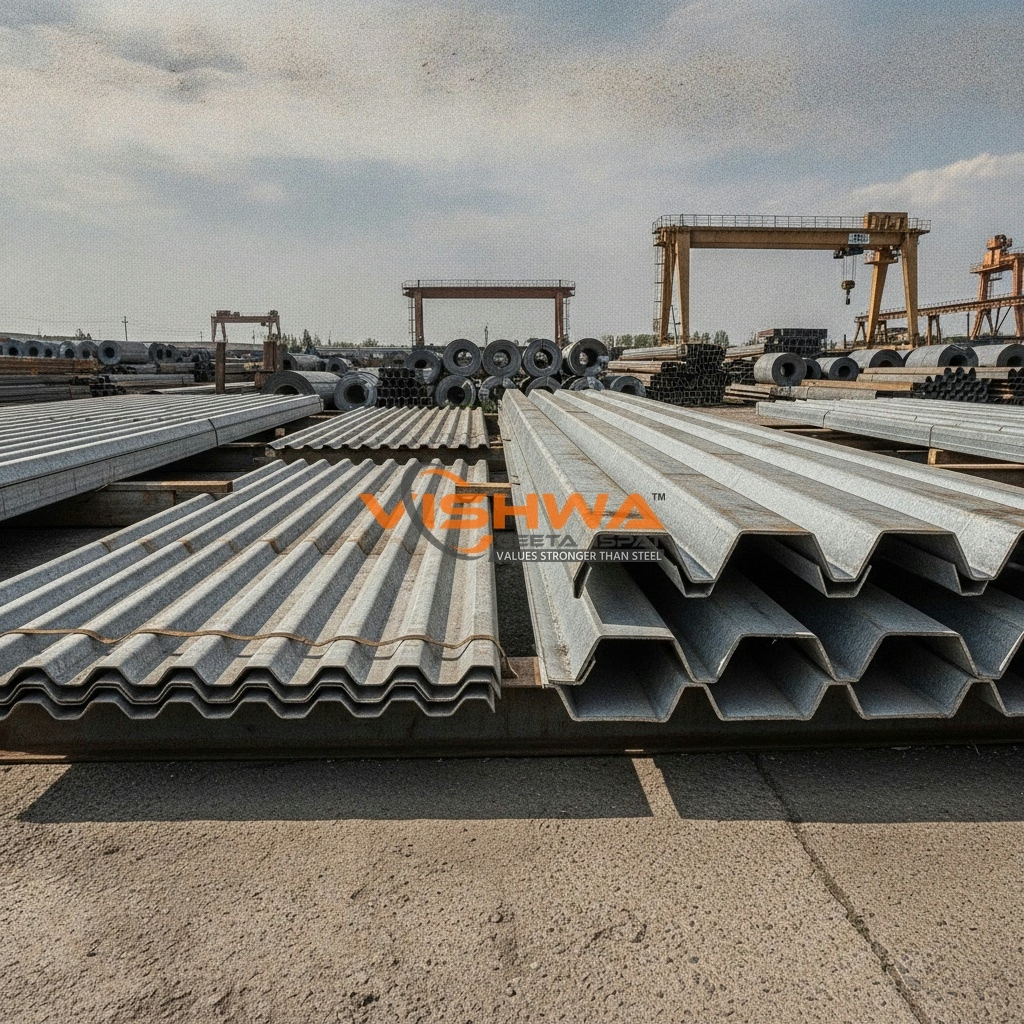
Different profiled metal deck sheet types stacked at a steel yard, illustrating roofing vs composite floor deck profiles.
Metal Deck Sheet Types: A Practical Selection Guide
A metal deck sheet is a profiled steel (occasionally aluminium) sheet designed to act as a structural base for roofs, floors, or walls. The corrugations and ribs aren't decorative — they're engineered to improve stiffness, span capability, load distribution, and drainage. Don't buy "a deck sheet" — buy a system: sheet + coating + accessories + fasteners + correct installation. Skipping any part of that system is what causes leaks, dents, and early corrosion.
Three Types, Three Different Jobs
Roof Deck Sheets
Optimised for drainage, wind uplift resistance, and weather tightness. Typically corrugated or trapezoidal profiles (sinusoidal or box-rib), paired with insulation and waterproofing layers. Fastener placement is critical for wind uplift resistance; ridge, eave and valley flashing are part of the complete system, not optional extras.
Floor / Composite Deck
Designed to act as permanent formwork and mechanically bond with concrete — 51mm rib depth is most common. Surface embossing provides the mechanical interlock with concrete. Priority is load capacity and deflection control; anti-crack mesh and edge trims are mandatory accessories, and thickness must never be self-specified without structural engineering input.
Wall Cladding Sheets
Used for side walls, internal partitions, and building envelope weather resistance. Colour-coated finishes are common for commercial buildings. Live loads are lower than roofs, but wind racking pressure still matters — edge flashing and junction sealing improve weather tightness.
Profile is an engineering choice, not a preference — use the profile designed for your application, not just the one that's most available.
The 5 Performance Levers
- Profile depth & shape: determines stiffness, span capability, and drainage behaviour
- Thickness (BMT): governs dent resistance, load behaviour, and fastener holding strength — always specify in Base Metal Thickness, not gauge or TCT
- Coating system: must match the real site environment — a coating adequate for a dry interior isn't adequate for a coastal industrial shed
- Support spacing: the sheet performs only as designed for its specified support centres; changing purlin spacing invalidates the structural basis
- Fasteners & sealing: the most common source of leaks and uplift failures — wrong washer, torque, spacing, or missing lap sealant
Where Selection Failures Show Up
A deck sheet that looks correct on delivery can fail early if profile, thickness, or coating weren't matched to the actual site conditions. The symptoms build gradually: noise from vibrating panels, brown staining at fastener points, recurring patches on leak-prone laps, and sagging between purlins that was never in the original plan. A correctly specified sheet on a 20-year industrial building typically has zero leak events; an under-specified one may need partial re-roofing within 8–10 years — at several times the cost of the initial saving.
No-Guesswork Selection Checklist
- Confirm profile type matches the application (roof vs floor vs cladding) — never substitute across categories
- Specify thickness in BMT (mm), verified against your span and load requirement
- Match coating system to the real site environment, not the cheapest available option
- Confirm support/purlin spacing matches what the sheet was designed for
- Include fasteners, sealants, and flashing as part of the quote — not as a separate afterthought
Frequently Asked Questions
What's the difference between roof deck and floor deck sheets?
Roof deck is optimised for drainage and weather tightness; floor/composite deck is engineered to bond mechanically with concrete as permanent structural formwork. They are not interchangeable.
Can I use the same deck sheet for roofing and wall cladding?
Not ideally — each profile is engineered for its specific load type and drainage/weathering behaviour. Using a roofing profile for cladding (or vice versa) is a specification error, even if the sheet looks similar.
Why do "identical" deck sheets from two suppliers perform differently?
Often the profile, coating system, or BMT differs even when a sheet "looks" the same. Always confirm exact specification, not just visual similarity.
What accessories are essential with a deck sheet order?
Fasteners with the correct washer and spacing, lap sealants, and flashing (ridge/eave/valley for roofs, edge trims and anti-crack mesh for floor decks) — a sheet without these is an incomplete system.
How long should a correctly specified deck sheet last?
On a well-specified industrial building, 20+ years with minimal leak events is achievable when profile, coating, and fastening are correctly matched to the environment and structural requirement.
Share your application, span, location and environment — Vishwa Geeta Ispat will recommend the right specification.
Contact Us on WhatsApp