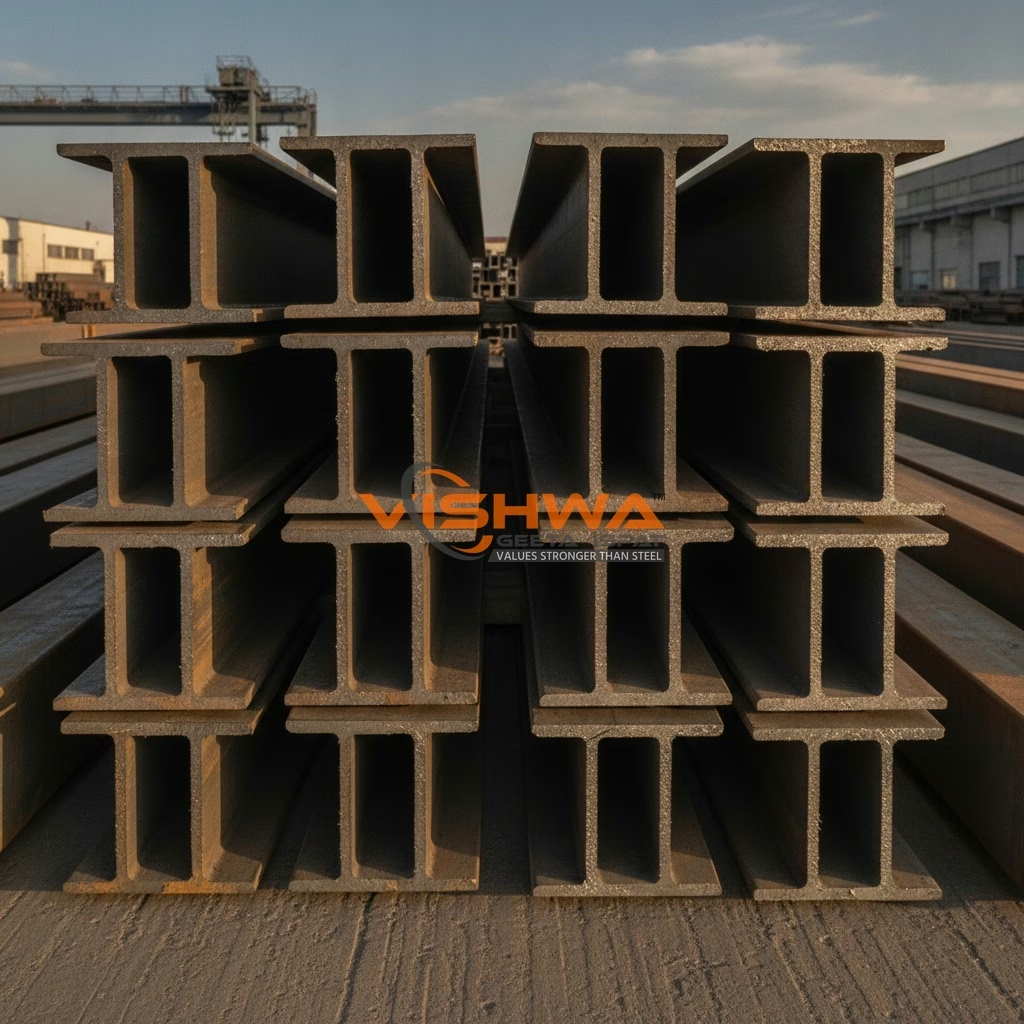
Worker measuring an H-beam flange, related to H beam size chart specifications.
H Beam Size Chart: Complete ISHB Reference & How to Read It
H-beam sizes in India follow the ISHB (Indian Standard Heavy Beam / Wide Flange) series under IS 808 — the standard sections produced by SAIL and JSPL. Reading this chart correctly, not just glancing at nominal depth, is what separates a correctly specified order from a costly procurement mistake.
Complete H-Beam Size Chart (ISHB Series)
| Section | Depth H (mm) | Flange B (mm) | Web tw (mm) | Weight (kg/m) |
|---|---|---|---|---|
| ISHB 100 | 100 | 75 | 5.0 | 19.5 |
| ISHB 150 | 150 | 100 | 5.4 | 24.0 |
| ISHB 200 | 200 | 200 | 6.1 | 37.3 |
| ISHB 225 | 225 | 225 | 6.5 | 43.1 |
| ISHB 250 | 250 | 250 | 6.9 | 51.0 |
| ISHB 300 | 300 | 250 | 7.6 | 58.8 |
| ISHB 350 | 350 | 250 | 8.1 | 67.4 |
| ISHB 400 | 400 | 250 | 8.8 | 77.4 |
| ISHB 450 | 450 | 250 | 9.8 | 87.2 |
| ISHB 500 | 500 | 250 | 10.2 | 95.0 |
| ISHB 600 | 600 | 250 | 11.2 | 112.5 |
All values from IS 808, nominal kg/m with ±2.5% rolling tolerance per IS 1852. Each base section also has a heavier "(1)" sub-series variant with the same depth but thicker web and flanges — confirm which variant your drawing specifies. Request a Mill Test Certificate for structural applications. For imported wide-flange sections (W-shapes, UC), dimensions differ from ISHB at the same nominal depth.
How to Read the Chart Without Getting Confused
- Start with depth (H): the first filter — governs span capacity and major-axis bending resistance. Never select less depth than your engineer specified.
- Check flange width (B): the stability parameter for lateral forces and columns. A beam where B is close to H is more laterally stable than one with a narrower flange, even at a shorter depth.
- Verify web and flange thickness: the "(1)" sub-series has the same depth as the base section but heavier web/flanges — this changes kg/m by 15–25% and section properties significantly. Ordering the base section when the design specifies the "(1)" variant is a structural error, not just a weight difference.
Why the Weight Column Is the Procurement Column
kg/m converts a depth selection into budget and logistics planning. Two sections that look similar in depth can differ by 20–30% in kg/m — on a large order, that difference can mean lakhs in material cost. Always confirm kg/m against the exact section code, not by eyeballing depth.
Common Mistakes When Using the Size Chart
- Selecting by depth alone without checking flange width for lateral stability or column use
- Confusing the base section with its heavier "(1)" sub-series variant
- Comparing an ISHB row against an imported W-shape/UC table as if dimensions match — they don't
- Not requesting the Mill Test Certificate to confirm actual dimensions against IS 808 tolerance
Frequently Asked Questions
What is the ISHB series?
ISHB (Indian Standard Heavy Beam) is the wide-flange H-beam series under IS 808, produced by mills like SAIL and JSPL, distinct from the narrower ISMB (I-beam) series.
What's the difference between a base ISHB section and its "(1)" variant?
Same nominal depth, but the "(1)" sub-series has a thicker web and flanges — changing kg/m by 15–25% and section properties significantly. Always confirm which variant your drawing specifies.
How do I convert the size chart into a cost estimate?
kg/m × length × number of pieces ÷ 1,000 = total tonnes, then multiply by your confirmed rate per kg.
Why does flange width matter as much as depth?
Flange width governs lateral stability and column suitability — a section with B close to H resists lateral buckling better than a narrower-flanged section at the same depth.
Can I substitute an imported wide-flange section for an ISHB size?
Not directly — imported W-shape/UC sections follow different standards with different dimensions at the same nominal depth. Always match the standard specified on your drawing.
Share your span, load type, and column spacing — Vishwa Geeta Ispat will confirm the correct ISHB section and current rate.
Contact Us on WhatsApp