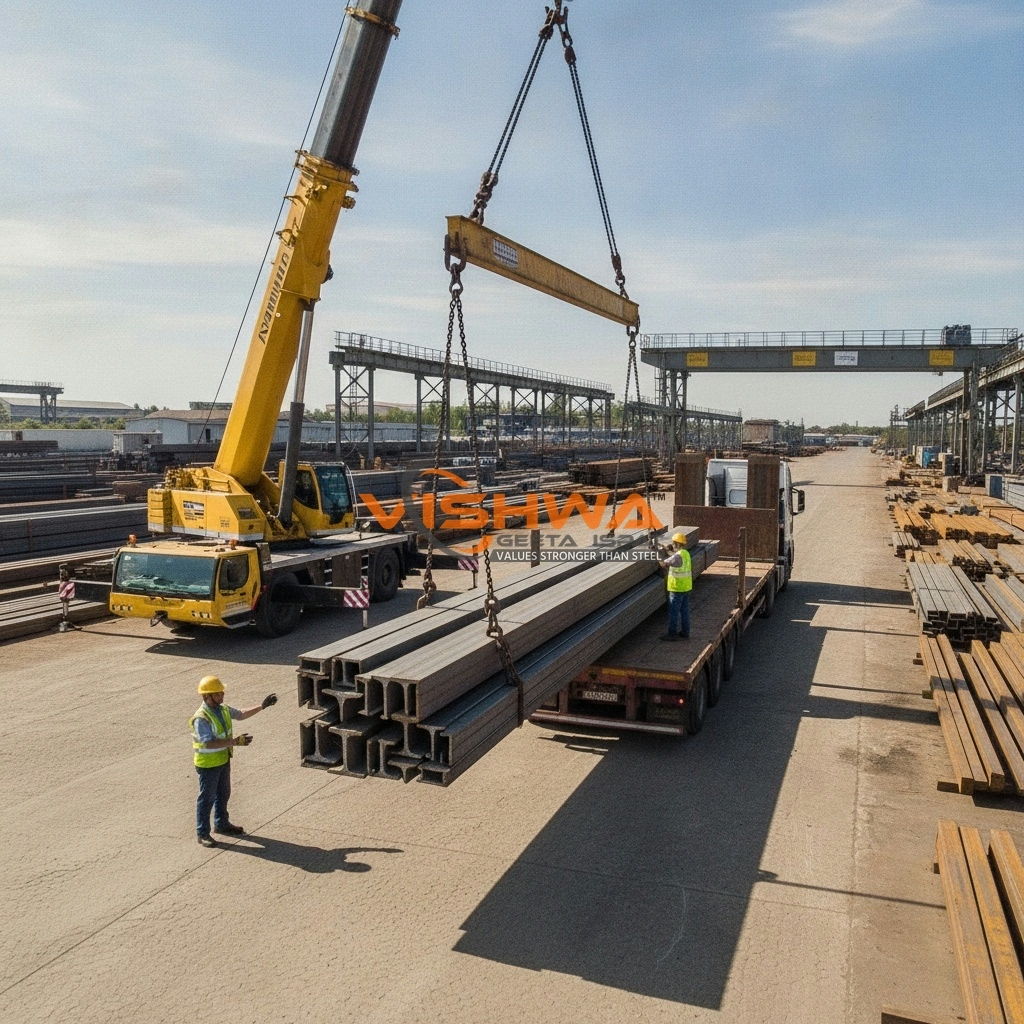
Crane loading RSJ steel poles onto a truck, related to RSJ pole weight chart and transport planning.
RSJ Pole Weight Chart: kg/m & Project Planning Guide
An RSJ pole weight chart isn't just data — it's planning information that prevents on-site surprises. Many buyers choose RSJ poles by height or appearance alone, which works fine until transport capacity is miscalculated, cranes are undersized, or billing arrives with unexpected totals. Remember one formula: kg/m from the chart × length in metres = total weight, and every downstream decision follows from it.
The Only Formula You Need
Total Weight (kg) = kg/m × Length (m)
Project Transport Load (kg) = Total Weight per pole × Quantity
Example: a section rated at 25 kg/m, pole length 12m → 25 × 12 = 300 kg per pole. The most frequent and expensive error is treating kg/m as total weight — this underestimates actual load by a factor of 10 or more.
A difference of just 2–3 kg/m, across 12m × 50 poles, equals 1,200–1,800 kg of unplanned weight — enough to exceed a vehicle's rated capacity or need a different crane category if not planned for in advance.
Why Depth Alone Can Mislead
Weight per metre depends on three geometric parameters together: web thickness, flange width, and overall section depth. Two poles of similar overall depth can have very different kg/m if web and flange dimensions differ. This is why a chart showing ISJB 150 and ISLB 150 shows different kg/m — the "150" refers to depth, but flange and web geometry differs between the light beam (ISJB) and light-weight beam (ISLB) series. Comparing by size alone hides a 20–30% weight difference that a proper chart makes visible.
Transport & Lifting Planning
Transport teams depend on weight chart data more than anyone else on a project. The common failure scenario: poles ordered based on visual inspection or "similar to last time" — on delivery, the vehicle is overloaded because actual kg/m was higher than assumed, unloading needs equipment that wasn't planned for, and installation timelines slip. Calculating kg/m × length × quantity before ordering lets you match vehicle capacity, book the right crane, and plan unloading and storage in advance — at zero cost, versus reactive problem-solving at full disruption cost.
How to Use the Chart Correctly
- Confirm the full section designation (e.g. ISMB 200, not just "200mm depth") and kg/m from the supplier's current chart
- Calculate total weight per piece = kg/m × length
- Calculate total project weight = weight per piece × quantity
- Compare quotes on a kg/m basis — a "cheaper per piece" offer can be more expensive per kg once sections differ in weight
Common Mistakes
- Treating kg/m as total weight: the most frequent and expensive error — a 25 kg/m, 12m section weighs 300kg, not 25kg
- Reading only section depth: ignoring web/flange thickness can hide a 20–30% weight difference between series
- Using old or borrowed charts: supplier stock changes over time — an outdated chart may show sections no longer available or at a different kg/m
- Comparing prices without confirming kg/m: always compare on like-for-like section and weight basis
Frequently Asked Questions
What is the formula for RSJ pole weight?
Total weight (kg) = kg/m × length in metres. For a full order, multiply by quantity for total project weight.
Why do two poles with the same depth have different weights?
Web thickness and flange width differ between section series (e.g. ISJB vs ISLB) even at the same nominal depth, changing kg/m by 20–30%.
What's the most common RSJ weight chart mistake?
Treating kg/m as the total pole weight instead of multiplying by length — this underestimates actual load by a factor of 10 or more.
Why does an outdated weight chart cause problems?
Supplier stock changes over time — an old chart may reference sections no longer available or list an incorrect kg/m for the current stock.
How should I compare RSJ pole prices between suppliers?
On a kg/m basis with the same section designation and length — a lower per-piece price can mean a lighter, cheaper section rather than a genuine discount.
Share section preference, length, and quantity — Vishwa Geeta Ispat will provide kg/m clarity and a clean quotation.
Contact Us on WhatsApp