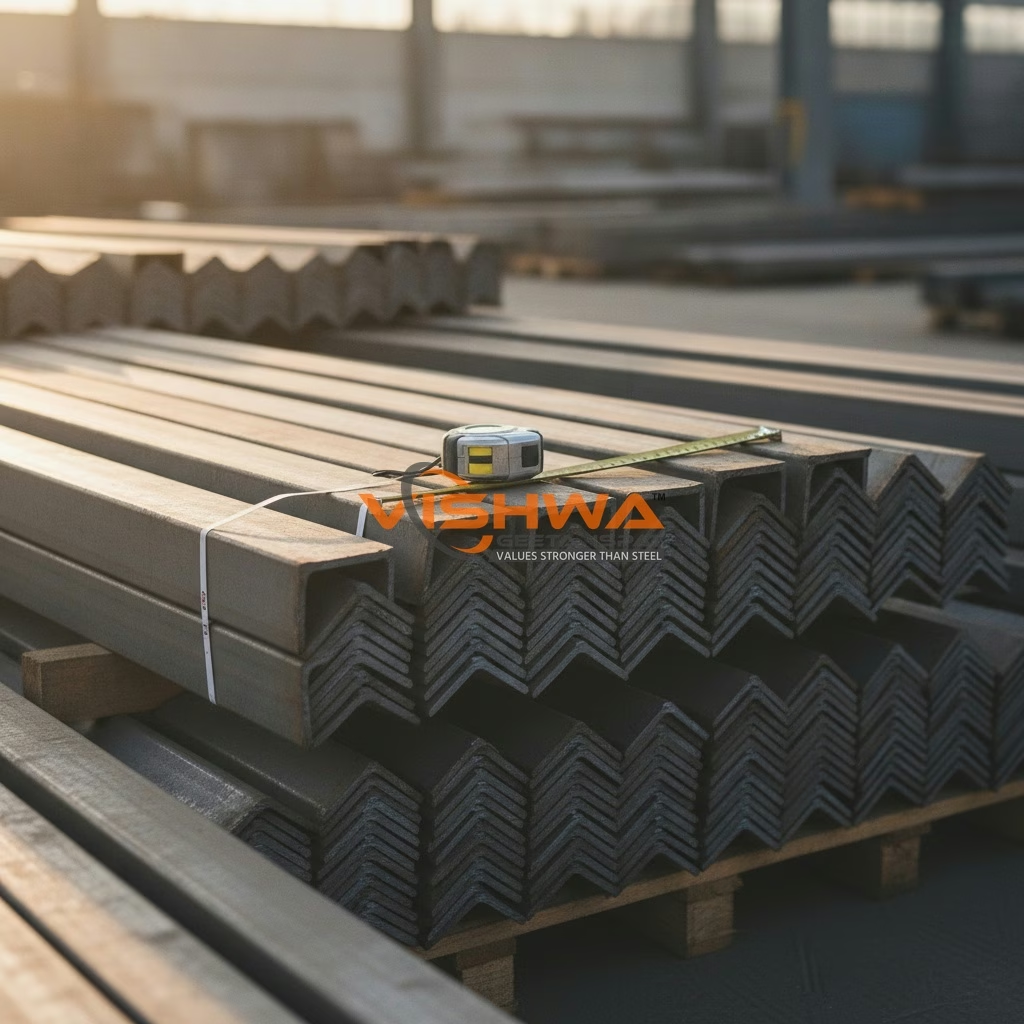
Stacked MS angle steel sections, related to MS angle weight chart formula.
MS Angle Weight Chart (kg/m): Formula for Equal & Unequal Angles
Angle steel looks simple, but weight decides the bill. When contractors and fabricators work only in metres or pieces — without converting to kg — they frequently hit billing mismatches, overloaded transport vehicles, and incorrect BOQ quantities. Leg length (a, b) and wall thickness (t) directly set the cross-sectional area, and therefore weight per metre — longer legs and thicker walls always mean more kg/m.
The Formula
Weight (kg/m) = t × (a + b − t) × 0.00785
Where a and b are the leg lengths in mm (equal for equal angles, a≠b for unequal angles) and t is thickness in mm. The constant 0.00785 comes from steel density (7,850 kg/m³ ÷ 1,000,000).
Worked Examples
- 25×25×3mm equal angle: t × (a+b−t) = 3 × (25+25−3) = 141 → 141 × 0.00785 = 1.09 kg/m
- 50×50×6mm equal angle: 6 × (50+50−6) = 564 → 564 × 0.00785 = 4.43 kg/m
- 75×50×8mm unequal angle: 8 × (75+50−8) = 936 → 936 × 0.00785 = 7.35 kg/m
Total kg = Weight (kg/m) × Length (m) × Number of pieces. Example: 50×50×6 at 6m length = 4.43 × 6 = 26.6 kg per piece.
Why Angle Steel Weight Matters
The MS angle weight chart converts size into the number that actually drives cost, transport planning, and BOQ accuracy — a piece specified only by leg size and length is incomplete for procurement or logistics until kg/m is confirmed.
Common Applications of Angle Steel
- Structural framing: towers, trusses, and support structures where angle sections provide efficient bracing
- Fabrication: machine bases, frames, brackets, and general workshop fabrication
- Construction: scaffolding, gates, railings, and lintels
- Transmission & towers: angle sections are a standard component in lattice tower construction
Frequently Asked Questions
What is the formula for MS angle weight per metre?
Weight (kg/m) = t × (a + b − t) × 0.00785, where a and b are leg lengths in mm and t is thickness in mm.
How do I calculate the total weight of an angle piece?
Use the formula (or a calculator) to get kg/m, then multiply by the length in metres. Example: 50×50×6 at 6m = 4.43 kg/m × 6m = 26.6 kg per piece.
What's the difference between equal and unequal angles?
Equal angles have the same leg length on both sides (a=b); unequal angles have different leg lengths (a≠b), used where different bracing dimensions are needed on each axis.
Why does angle weight matter for transport planning?
Total order weight (kg/m × length × quantity) determines vehicle capacity and crane requirements — under-calculating leads to overloaded transport and unplanned handling costs.
Do different manufacturing processes affect angle weight?
Actual weight can vary slightly from the theoretical formula value due to manufacturing tolerance — verify with the Mill Test Certificate for billing-critical orders.
Share leg size, thickness, and quantity — Vishwa Geeta Ispat will confirm kg/m and a mill-linked quote.
Contact Us on WhatsApp