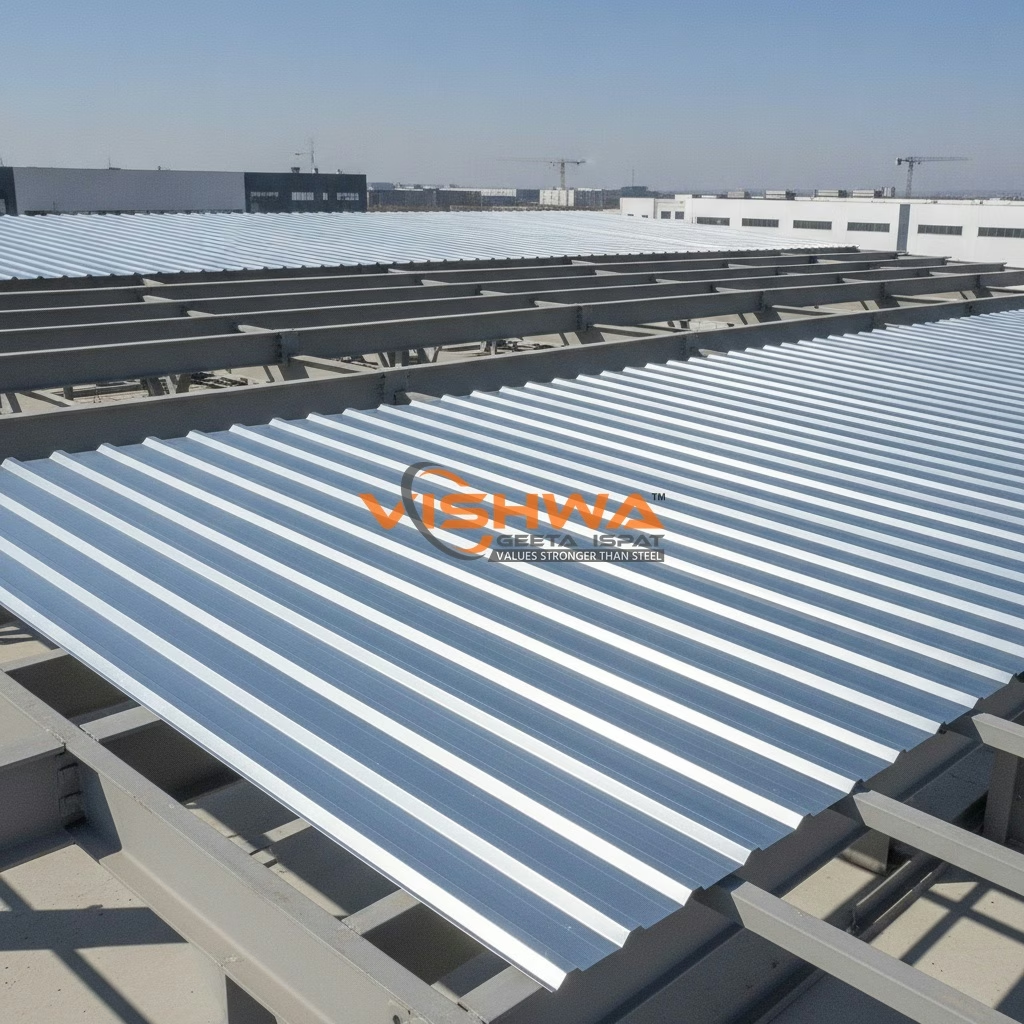
Stacked galvanized deck sheets, related to deck sheet installation and maintenance.
Deck Sheet Installation & Maintenance: Getting It Right After the Purchase
A correctly specified deck sheet can still leak, vibrate, dent, or corrode early if installation shortcuts are taken on site. Installation quality — not just the sheet itself — is where most deck sheet failures actually begin. This guide covers the four installation factors that matter most, plus a realistic maintenance schedule and the lifecycle cost view that changes how "cheap vs quality" should be compared.
4 Installation Factors That Matter Most
Correct Overlap & Alignment
End-laps should be a minimum 150–200mm for slopes below 10°, with sealant tape or foam filler on monsoon-exposed roofs. Side-laps must be fastened at the correct spacing. Skewed sheets create continuous water ingress paths that are nearly impossible to fix from inside once installed.
Correct Fasteners & Washers
Self-drilling screws must match the sheet thickness — thread pitch and point type vary. EPDM washers must be compressed to the correct torque: over-tightening crushes the washer and creates a leak path, under-tightening leaves the screw unsealed. Torque-limited screwguns prevent both errors.
Correct Support Spacing
Every sheet is designed for a specific maximum purlin spacing based on its profile and thickness. Exceeding this causes mid-span sag, oil-canning, and potential lap seal failure under wind load. Purlin spacing must match the specification, not site convenience.
Coating Protection During Handling
Scratches from transport, unloading, and installation expose bare metal to immediate corrosion initiation. Touch up all scratches and cut edges with zinc-rich aerosol paint within 24 hours of installation. Never drag sheets across each other or across abrasive surfaces.
Maintenance Schedule — Low-Maintenance, Not Zero-Maintenance
Deck sheets are generally low-maintenance, but dirt in valleys, gutter debris, water pooling, and minor scratches are the starting points for premature corrosion. A quarterly inspection that takes 30 minutes prevents most early corrosion issues:
- Quarterly: clear debris from valleys and gutters, check for water ponding
- Half-yearly: inspect fastener compression and sealant condition at overlaps
- Annually: touch up scratches and cut edges, inspect flashing and penetration seals, check for early zinc depletion in coastal/industrial sites
Thicker sheets and better coatings reduce maintenance frequency, since they're more resistant to denting, coating micro-cracking, and fastener fatigue — all of which initiate maintenance needs.
The Lifecycle Cost View
Buying deck sheets isn't only about the per-kg price at purchase. A sheet that saves a few rupees per kg upfront but requires partial re-roofing within 7 years has returned a negative net saving once installed re-roofing cost is counted. The correct comparison is always total cost over the service life, not day-one procurement price — the same logic as buying quality footwear that costs more per pair but far less per year of actual use.
7-Point Selection Checklist to Confirm Before Any Quote
| Parameter | Recommended Direction | Common Mistake |
|---|---|---|
| Application | Roof → lighter possible; floor/mezzanine → structurally confirmed thickness; composite slab → engineer's spec only | Using a roofing sheet for floor load or composite slab |
| Profile type | Corrugated for simple roofing; trapezoidal for higher stiffness; box-rib for composite slabs | Choosing by appearance rather than structural requirement |
| Thickness | Specify as mm BMT, matched to load/span/impact | Accepting a TCT quote without confirming BMT |
| Coating | Monsoon/coastal → Z275 minimum or Galvalume; aggressive environments → PVDF | Matching coating to budget instead of site environment |
Frequently Asked Questions
Why does a correctly specified deck sheet still leak sometimes?
Most deck sheet failures start at installation, not specification — wrong overlap, incorrect fastener torque, or exceeded support spacing are the most common causes.
How often should deck sheets be inspected?
Quarterly for debris/ponding, half-yearly for fastener and sealant condition, and annually for scratch touch-ups and flashing inspection.
Why do fastener washers matter so much?
Over-tightening crushes the EPDM washer and creates a leak path; under-tightening leaves the screw unsealed. Correct torque is essential either way.
Is a cheaper deck sheet actually cheaper long-term?
Often not — a small per-kg saving upfront can be outweighed many times over by partial re-roofing costs if the sheet fails early. Compare total lifecycle cost, not just purchase price.
What should I confirm before accepting a deck sheet quote?
Application, profile type, BMT thickness, material standard, and coating type — matched to your actual site environment and load requirement.
Share your application, span, and environment — Vishwa Geeta Ispat will recommend the correct profile, thickness, and coating.
Contact Us on WhatsApp