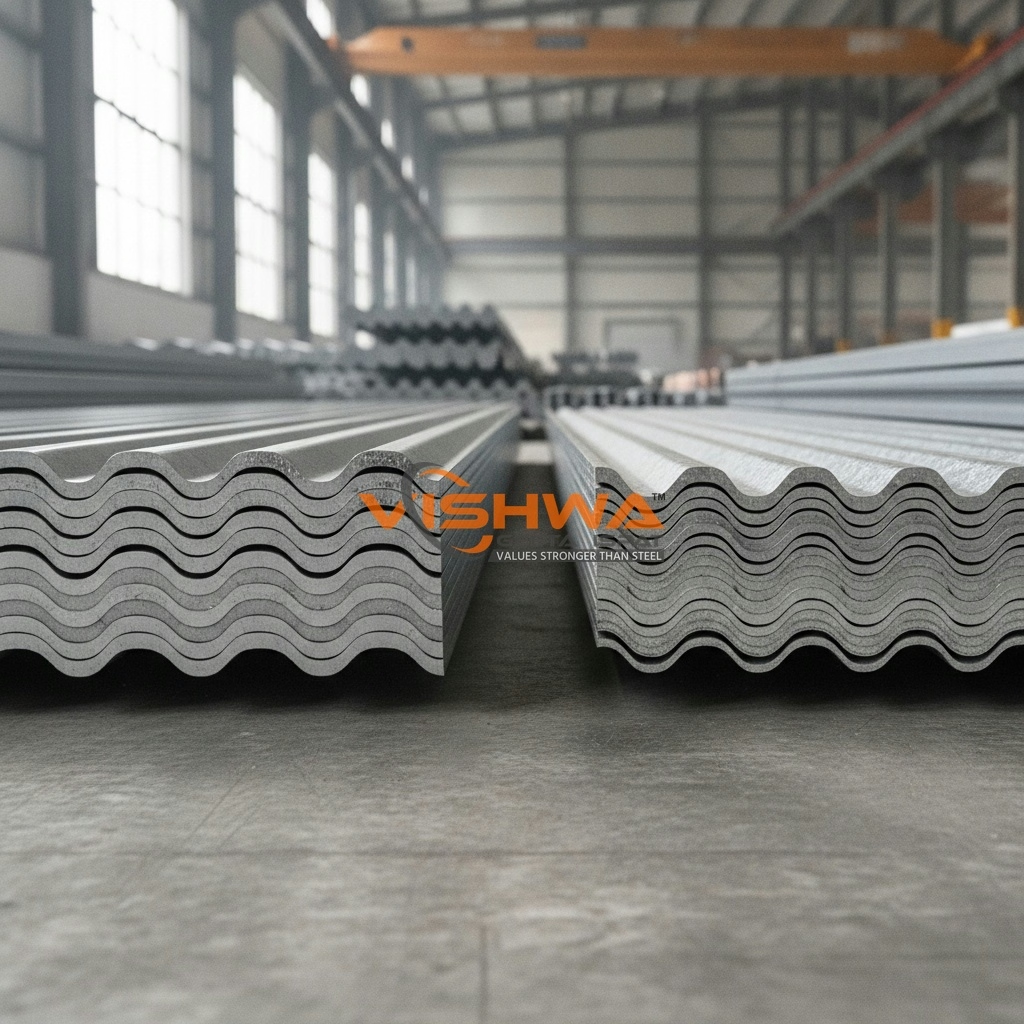
Two stacks of galvanized deck sheets showing different thickness profiles, related to deck sheet thickness (BMT) selection.
Deck Sheet Thickness Guide: How to Choose the Right BMT
Deck sheet thickness is the single most consequential spec decision in any purchase — it determines strength, sag resistance, dent resistance, wind uplift safety, and long-term durability. Two sheets can look identical (same coating, same profile) yet perform very differently if one is 0.45mm BMT and the other 0.35mm — the thinner sheet is lighter and cheaper, but far more prone to denting, sag, and fastener fatigue.
BMT vs TCT — The Number That Actually Matters
BMT (Base Metal Thickness) is the steel thickness before any coating — this is what governs strength, span capacity, deflection, and fastener performance. TCT (Total Coated Thickness) is larger because it includes zinc and/or paint, which carry no structural load. Always specify, compare, and verify quotes in BMT (mm), never in gauge or TCT alone.
Why the Wrong Thickness Fails Early
A deck sheet is a structural element under daily real-world stress: wind uplift cycles, thermal expansion, foot traffic loads during maintenance, water accumulation on low-slope roofs, and vibration near industrial machinery. An under-specified sheet doesn't fail immediately — it fails within the first monsoon season or two, once laps start leaking and panels need premature replacement. The apparent cost saving reverses quickly once repair and replacement labour is added.
Thickness Range & Typical Use
| BMT Range | Typical Application |
|---|---|
| 0.35–0.45mm | Light residential roofing, low-wind zones |
| 0.45–0.60mm | Standard residential/commercial roofing |
| 0.60–0.80mm | Industrial roofing, higher wind zones |
| 0.80–1.20mm | Composite floor decking, medium spans |
| 1.20–1.50mm | Heavy structural floor decking, long spans |
Exact requirement depends on span, purlin/support spacing, wind zone, and load — always confirm against your structural drawing, not just this general range.
4 Factors That Determine the Right Thickness
- Span: longer support spacing needs greater thickness to resist deflection and sag
- Load: foot traffic, snow/water ponding, or composite floor loads increase the required BMT
- Wind zone: higher wind-uplift zones need thicker sheet and closer fastener spacing
- Environment: coastal/humid sites benefit from both adequate BMT and a suitable coating system
Buying Checklist
- Always request BMT in mm — reject quotes that only state "gauge" or TCT
- Confirm the thickness matches your structural engineer's span/load calculation, not just budget
- Check tolerance — some suppliers quote nominal thickness that's thinner in practice
- Verify coating type and weight (GSM) separately from BMT — they solve different problems
Frequently Asked Questions
What is the difference between BMT and TCT?
BMT is the bare steel thickness before coating and governs structural strength. TCT includes the zinc/paint coating and is always a larger number — but the coating adds no structural strength.
What deck sheet thickness do I need for roofing?
Typically 0.35–0.60mm BMT for residential/light commercial roofing, depending on span and wind zone — always confirm with span tables or a structural engineer.
Can I use a thinner sheet to save cost?
Not safely — a thinner sheet saves a small amount upfront but is significantly more prone to denting, sag and fastener fatigue, often failing within 2-5 years.
Why do two "same thickness" quotes perform differently?
One may be quoting BMT and the other gauge or TCT — always ask the supplier to confirm BMT in mm explicitly.
What thickness is used for composite floor decking?
Typically 0.8mm–1.5mm BMT depending on span and structural load, always specified by the structural engineer.
Share your span, application, and location — Vishwa Geeta Ispat will recommend the correct BMT and specification.
Contact Us on WhatsApp