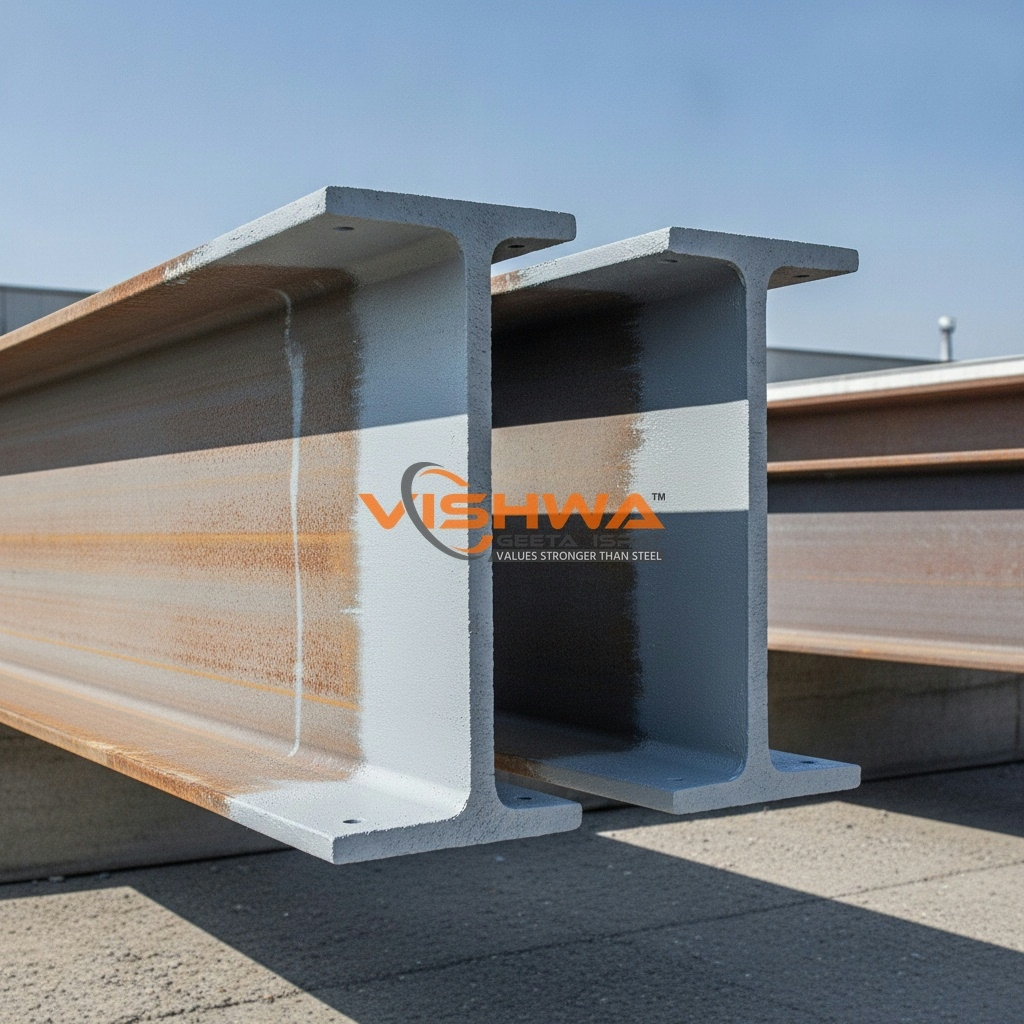
H-beam sections showing rust versus fresh coating, related to H beam durability and corrosion protection.
H-Beam Durability: Thermal Expansion & Corrosion Protection
Weather affects an H-beam more than most buyers realise. Steel expands and contracts with temperature, and unprotected steel loses section thickness to corrosion every year it goes uncoated — both are structural, not cosmetic, concerns over a building's service life.
Thermal Movement — A Real Structural Load
Steel expands when heated and contracts when cooled. Over a 20-metre H-beam in a typical Central Indian environment, the temperature difference between a summer afternoon and a winter morning can cause 12–18mm of thermal movement. This is why expansion joints, slotted bolt holes, and flexible connections are built into steel frame designs — ignoring them causes connection cracking and alignment problems over time.
Corrosion — The Silent Section Loss
Unprotected mild steel in a humid environment can lose 0.1–0.3mm of thickness per year to rust. On a beam with 6–10mm flanges, that's a meaningful proportion of section capacity lost over a 20-year service life — faster still in coastal, industrial, or chemically aggressive environments.
Minimum Recommended Coating System
- Surface preparation: blast cleaning to Sa 2.5 (IS 13944)
- First coat: zinc-rich epoxy primer (75 micron DFT minimum)
- Intermediate coat: epoxy MIO (75 micron DFT)
- Final coat: polyurethane or alkyd enamel (50 micron DFT)
- Inspection cycle: 5–7 years in normal environments, 2–3 years in coastal/industrial environments
Coating maintenance is a fraction of the cost of structural repair or beam replacement — treat it as scheduled maintenance, not an optional extra.
Where H-Beams Are the Standard Choice
- Industrial sheds & warehouses: primary columns (ISHB 200–300) and rafters (ISHB 250–400) for portal frames spanning 12–30m
- Bridges & flyovers: main and cross-girders where deep sections and flange stability handle moving vehicular loads
- Multi-storey frames: primary columns where biaxial stiffness favours wide-flange sections over narrower I-beam columns
- Crane runway girders: heavy ISHB sections (350–500+) in workshops with overhead cranes — a demanding fatigue environment
- Platforms & mezzanines: primary beams where deflection control and vibration resistance are design-critical
Frequently Asked Questions
How much does an H-beam move with temperature?
A 20-metre beam in Central India can see 12–18mm of thermal movement between summer afternoon and winter morning temperatures — accounted for via expansion joints and slotted connections in the design.
How fast does an unprotected H-beam corrode?
Roughly 0.1–0.3mm of section thickness per year in a humid environment, faster in coastal or industrial settings — a meaningful loss on 6–10mm flanges over 20 years.
What's a proper corrosion protection system for an H-beam?
Blast-cleaned surface (Sa 2.5), zinc-rich epoxy primer, epoxy MIO intermediate coat, and a polyurethane or alkyd enamel final coat — inspected every 5–7 years normally, 2–3 years in aggressive environments.
Is coating maintenance really worth the cost?
Yes — coating maintenance costs a fraction of what structural repair, section replacement, or line/operations downtime would cost if corrosion is left unmanaged.
Where are H-beams most commonly used structurally?
Industrial shed columns/rafters, bridge girders, multi-storey building columns, crane runway girders, and mezzanine platform beams.
Share your application and environment — Vishwa Geeta Ispat will recommend the right section and coating specification.
Contact Us on WhatsApp