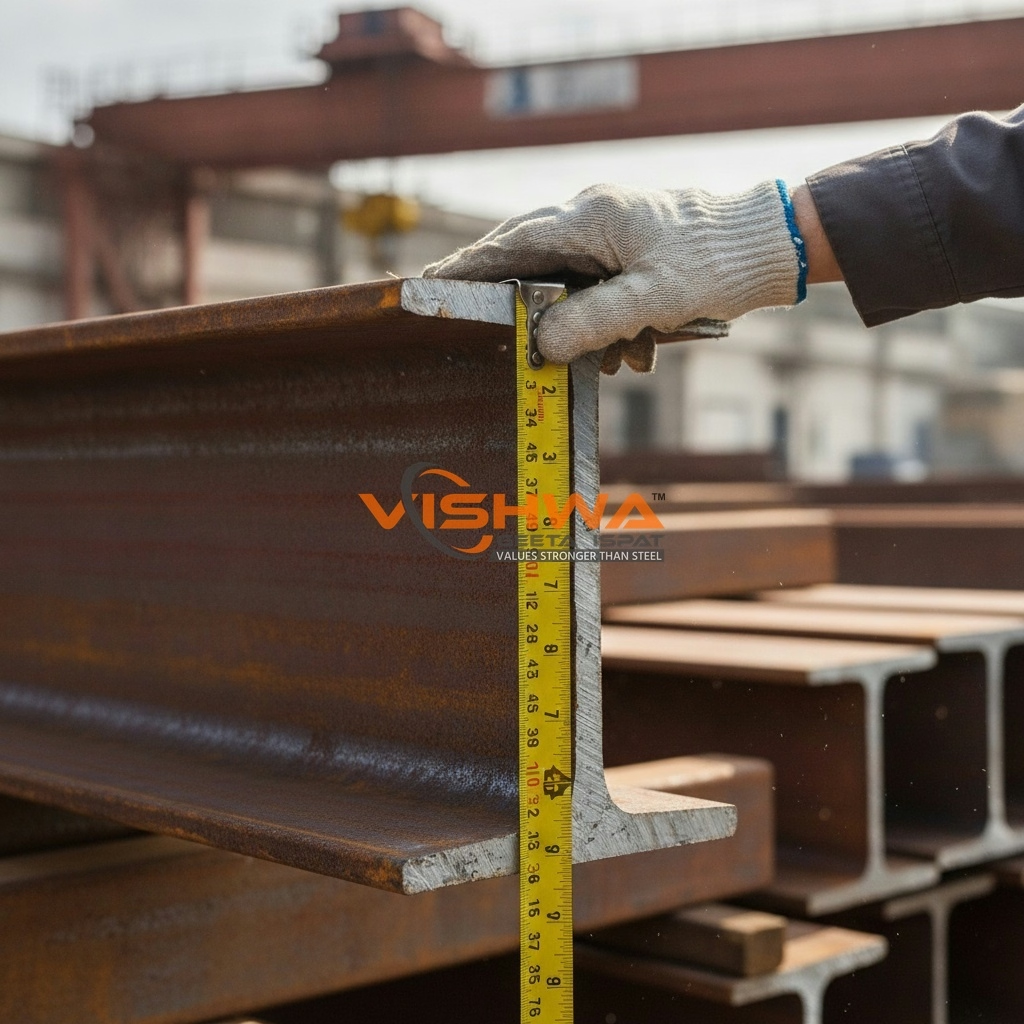
Measuring an I-beam flange with a tape measure, related to I beam weight chart calculations.
I Beam Weight Chart in Kg: How to Use It Correctly
The I beam weight chart in kg is the starting point of a chain that runs through every stage of a project: kg/m → total order weight → material cost → freight cost → crane capacity → fabrication planning → dead load on the structure. Getting this number right at the beginning prevents expensive corrections later — a beam that looks similar can differ by 5–10 kg/m depending on flange and web geometry, so always confirm the exact section code and kg/m from the IS 808 table before committing to a quote.
How Weight Is Calculated
Every ISMB section is defined by five dimensions — depth, flange width, web thickness, flange thickness, and root radius — which together define the cross-sectional area of steel. Multiply that area by length to get volume, then by steel density (7,850 kg/m³) to get weight:
Weight (kg) = Cross-sectional area (m²) × Length (m) × 7,850 kg/m³
For practical use, this simplifies to: Weight (kg) = kg/m × Length (m), where kg/m comes directly from the IS 808 weight chart. For a full order: Total kg = kg/m × length per piece × number of pieces, divided by 1,000 for total tonnes.
Worked Example
ISMB 250 = 37.3 kg/m. An order of 40 pieces at 9 metres each: 37.3 × 9 × 40 = 13,428 kg = 13.43 MT. At an example rate of ₹52/kg, material cost works out to roughly ₹6,98,256. Switch to ISMB 300 (46.1 kg/m) for the same order and it becomes 16,596 kg — a jump of over ₹1.6 lakh from moving up just one section size, before GST, loading, and freight. (Rate used for illustration only — contact Vishwa Geeta Ispat for the current confirmed rate.)
Why Weight Chart Accuracy Is a Structural Safety Issue
Engineers use section weight as a design cross-check: if the kg/m from the chart doesn't align with what was used in structural calculations, the wrong section has likely been sourced. A beam that's too light may deflect beyond the design limit; one that's heavier than designed adds unplanned dead load to columns and foundations. On a multi-storey structure with 200 beams, even a systematic 5 kg/m error adds roughly 1 tonne of unaccounted dead load per 10 metres of beam span — enough to matter at scale.
Logistics Impact
A 12-metre beam that's only 4 kg/m heavier than assumed adds 48 kg per piece. Across a 200-piece order, that's an extra ~9.6 tonnes — enough to overflow a truck's rated axle load or require a larger crane category. Freight cost is calculated as total tonnes × rate per tonne, so a weight-chart error compounds directly into logistics cost.
Common Identification Mistakes
- Wrong series: reading an ISLB or ISWB row instead of ISMB for the same nominal depth — different series, different kg/m
- Wrong standard: comparing against a UB/UC (international) table instead of IS 808
- Unnecessary upsizing: "upgrading" a section for perceived safety without a structural recalculation — as the worked example shows, this can add lakhs in cost without a design requirement behind it
Frequently Asked Questions
How do I calculate I-beam weight from the chart?
Weight (kg) = kg/m (from the IS 808 chart) × length in metres. For a full order, multiply by the number of pieces and divide by 1,000 for total tonnes.
Why does a small kg/m difference matter so much?
Multiplied across a full project's beam length, even a few kg/m adds meaningful tonnage — affecting material cost, freight, crane capacity, and structural dead load.
Can I substitute a "similar depth" beam from a different series?
No — different series (ISMB vs ISLB vs ISWB) at the same nominal depth have different kg/m and section properties. Always confirm the exact series specified on your drawing.
Is upgrading to a heavier section always safer?
Not automatically — it adds cost and dead load without a design benefit unless a structural recalculation actually requires it. Confirm with your structural engineer before upsizing.
What information should I confirm before placing an I-beam order?
Section code (e.g. ISMB 250), confirmed kg/m from the IS 808 table, quantity, length, and current rate per kg — cross-checked against your structural drawing.
Share section code, quantity, and delivery location — Vishwa Geeta Ispat will confirm kg/m, price per kg, and dispatch timeline same working day.
Contact Us on WhatsApp