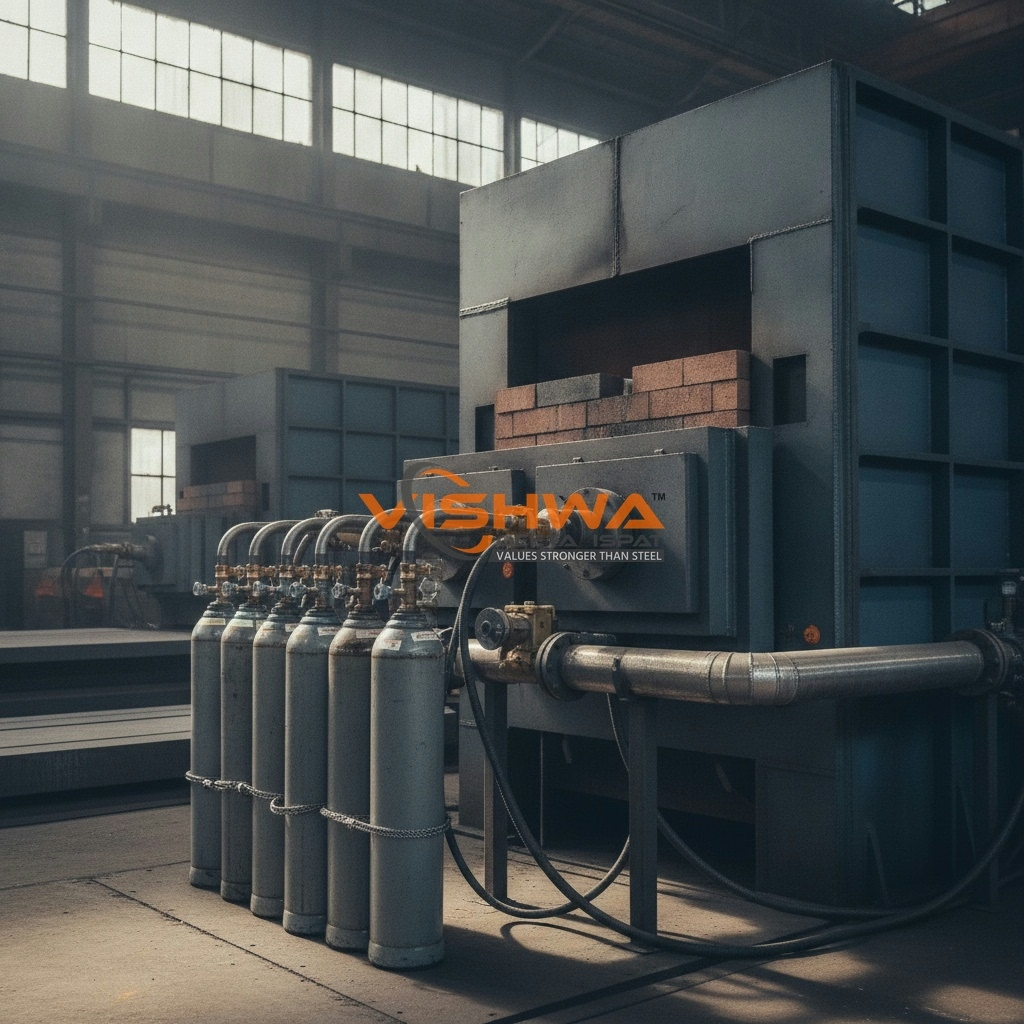
LPG cylinders connected to an industrial furnace, related to LPG supply impact on steel industry.
When LPG Supply Stops: Impact on Steel & TMT Bar Production
LPG plays a critical, often overlooked role across the steel value chain — from heating furnaces for steel melting to cutting and welding in fabrication units. Steel mills, re-rolling mills, and fabrication workshops depend on continuous LPG supply, and a disruption doesn't just pause one process — it cascades through production, quality, and pricing.
Cascade Effects of a Supply Disruption
- TMT rate volatility: supply shortage drives immediate price increases as inventory depletes; traders face margin pressure while customers delay purchases expecting a correction
- Supply chain breakdown: mills can't supply distributors, distributors can't fulfil retailer orders, and construction projects further down the chain stall
- Quality & safety concerns: partial furnace batches and temperature fluctuations affect TMT bar properties — incomplete heat treatment can compromise strength and IS-standard certification
- Employment impact: mill workers, fabrication labour, and transport drivers all lose income when a single input shortage halts operations
Risk Mitigation Strategies
Mills, fabricators, and large buyers manage LPG dependency risk through several practical measures:
- Dual supplier agreements: contracts with multiple LPG suppliers, with backup delivery tested for response time
- Buffer stock management: maintaining 48–72 hour on-site buffer inventory with automatic reorder triggers
- Consumption monitoring: digital flow meters tracking real-time usage to predict refill needs 24–48 hours in advance
- Automated alerts: low-level sensors triggering supplier notifications and procurement system integration
- Alternative energy backup: identifying processes that can temporarily switch to electricity or dual-fuel equipment
- Supplier relationship management: regular communication on delivery schedules and advance notice of potential constraints
Why This Matters for Buyers
Understanding the LPG dependency behind steel production explains why TMT rates can move even without a headline raw-material story — an energy supply disruption at the manufacturing stage reaches the price you pay through the same transmission chain as any other input cost shock, just less visibly tracked than iron ore or coal.
Frequently Asked Questions
Why does steel manufacturing depend so heavily on LPG?
LPG is the primary energy source for heating furnaces, cutting, and welding operations across steel mills, re-rolling mills, and fabrication workshops.
How does an LPG shortage affect TMT bar rates?
Supply shortage drives production slowdowns and inventory depletion, pushing rates up as traders face margin pressure and buyers may delay purchases expecting a correction.
Can an LPG disruption affect TMT bar quality?
Yes — partial furnace batches and temperature fluctuations from an interrupted heating process can compromise heat treatment and affect certification to IS standards.
How do mills protect against LPG supply disruption?
Dual supplier agreements, on-site buffer stock, consumption monitoring, and backup alternative energy options for critical processes.
Does LPG dependency affect steel trading beyond mills?
Yes — the entire chain from mill to distributor to retailer to contractor is affected, since a manufacturing slowdown reduces available supply throughout.
Contact Vishwa Geeta Ispat for confirmed stock and current rates.
Contact Us on WhatsApp