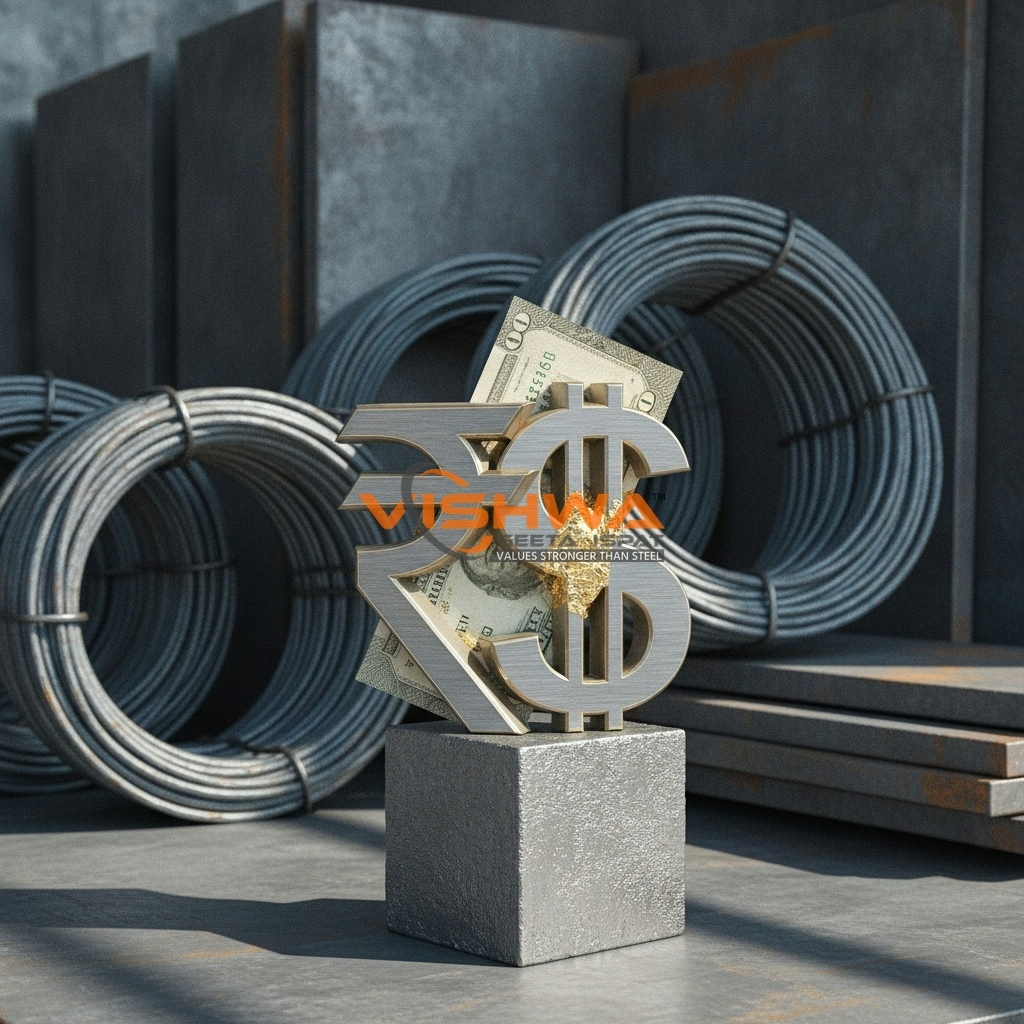
Rupee and dollar symbols with steel coils, related to currency effect on steel prices.
Rupee vs Dollar: How Currency Moves Affect Steel Prices
India is one of the world's largest steel producers, yet even steel produced entirely domestically depends on inputs — primarily coking coal, plus significant imported scrap and ferroalloys — priced internationally in US dollars. This is why the rupee vs dollar exchange rate is one of the most closely watched indicators by steel mills, traders, and large buyers.
Why Dollar-Denominated Inputs Matter
If a tonne of coking coal costs USD 200 and the exchange rate is ₹80 per dollar, the rupee cost is ₹16,000 per tonne — move the exchange rate and that rupee cost shifts even if the dollar price stays flat. Coking coal, a large share of iron ore trade, imported scrap, ferroalloys, and ocean freight are all USD-denominated, creating multi-channel currency exposure that compounds simultaneously when INR/USD shifts.
When the Rupee Weakens (Higher INR/USD)
- Imported steel becomes more expensive in rupee terms — reduces import competition, supporting domestic prices
- Indian steel exports may become more competitive globally, since the same rupee revenue converts to fewer dollars for foreign buyers
- Input costs (coking coal, scrap, freight) rise in rupee terms — compressing margins unless domestic prices rise proportionally
When the Rupee Strengthens (Lower INR/USD)
- Imported steel becomes cheaper in rupee terms — increases competitive pressure on domestic mills
- Indian exports may become less competitive globally, effectively pricing Indian steel higher for foreign buyers
- Input costs ease in rupee terms — mills see raw material cost relief if domestic price levels hold
Currency movement doesn't move steel prices directly — it moves costs and competitive dynamics, which then interact with supply, demand, and policy to produce the price that reaches your stockist.
The Price Transmission Chain (Why There's a Lag)
Currency market → mill raw material cost → mill production cost → mill-gate price revision → distributor → stockist → end buyer. This chain can take anywhere from a few days to several weeks, for several reasons:
- Most large mills revise prices periodically (often monthly), not continuously
- Mills and distributors carry inventory purchased at earlier costs — pricing may lag until that stock clears
- The effect is strongest when the currency move is large and sustained, and weakest when short, sharp fluctuations quickly reverse
- Firm domestic demand lets mills pass through cost increases; soft demand forces mills to absorb costs instead
Weak Rupee — Who Wins and Who's Exposed
- Integrated steel mills: higher rupee cost for imported coal squeezes margins unless prices rise; export revenue provides a partial natural hedge for mills with significant exports
- Traders & stockists: existing inventory at pre-depreciation cost shows an apparent windfall, but replenishing at new higher costs erodes future margins
- Contractors & fabricators: pure cost risk with no dollar revenue to offset — greatest exposure is fixed-price contracts quoted before the currency move
It's tempting to conclude a weaker rupee always means higher steel prices — but a weaker rupee coinciding with weak global demand or falling international coal prices can produce a different outcome. Currency is one important input into a system with many forces, not the only or always dominant one.
Beyond Currency: The Complete Picture
Global steel demand, government policy (import duties, safeguard measures), energy costs, and domestic supply/inventory position all interact with — and sometimes override — the currency effect. Assess the full market context rather than drawing procurement conclusions from currency movement in isolation.
Frequently Asked Questions
Why does the rupee-dollar rate affect steel prices in India?
Key steel inputs — coking coal, a large share of iron ore trade, imported scrap, and ferroalloys — are priced globally in USD, so currency movement changes their rupee cost even when dollar prices are unchanged.
Does a weaker rupee always mean higher steel prices?
Not always — it's one input among many. A weak rupee coinciding with soft global demand or falling coal prices can produce a different net outcome.
How long does a currency move take to reach steel prices at the stockist?
Typically days to several weeks, since mills revise prices periodically (often monthly) and existing inventory can delay the pass-through.
Who is most exposed to a weakening rupee?
Contractors and fabricators with fixed-price contracts quoted before the currency move — they have no dollar revenue offset and may absorb the increase mid-project.
What other factors affect steel prices besides currency?
Global steel demand, government import/export policy, energy costs, and domestic supply/inventory position all interact with the currency effect.
Contact Vishwa Geeta Ispat for confirmed TMT, structural steel, and pipe rates — updated daily.
Contact Us on WhatsApp