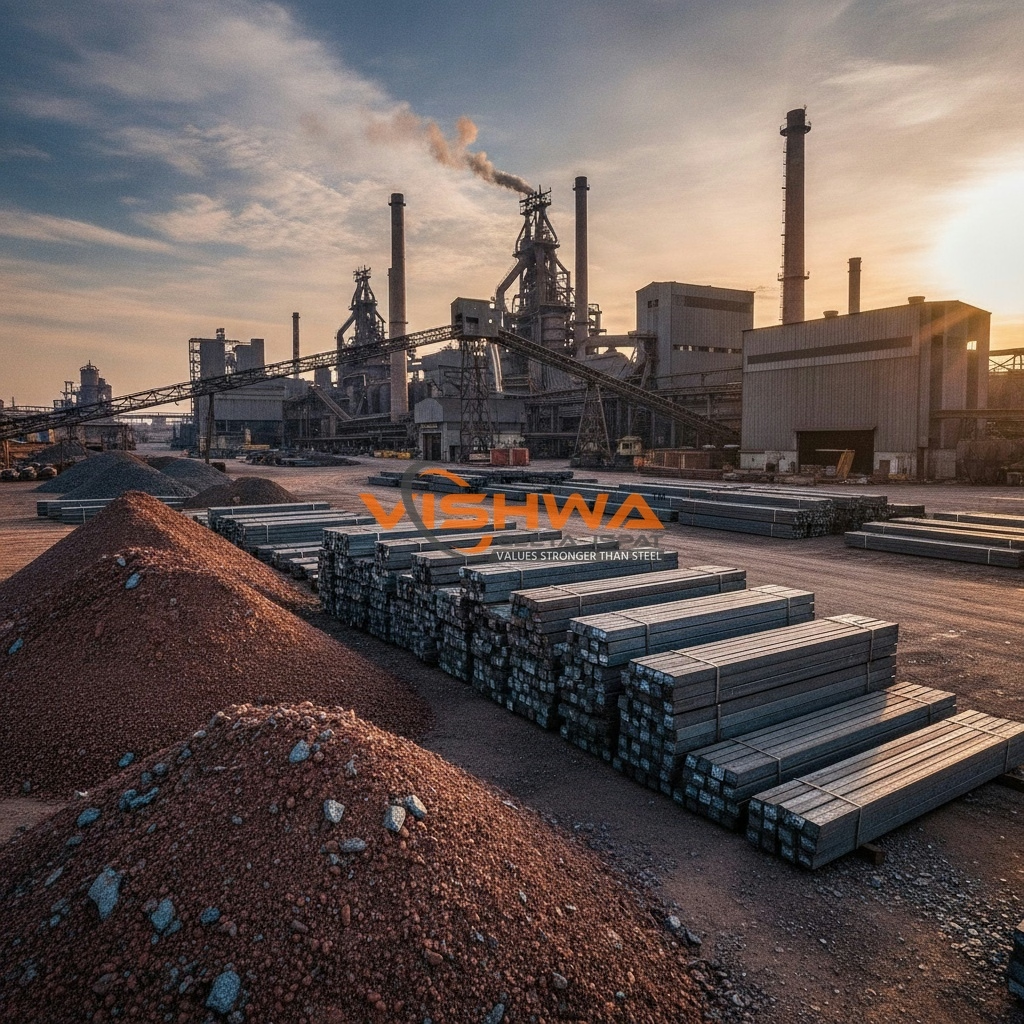
Iron ore piles and steel billets at a mill, related to why steel prices rise and fall.
Why Steel Prices Rise (and Fall) in India
Steel prices move in cycles because steel is a global commodity driven by multiple simultaneous forces — iron ore, scrap availability, sponge iron costs, power tariffs, freight rates, construction demand, China's export behaviour, and import parity all interact, sometimes in the same direction, sometimes not.
Raw Materials — The Biggest Engine
When input costs rise, finished steel typically follows — the steelmaker's margin compresses until the selling price adjusts.
- Iron ore: core input for blast furnace production, priced globally in USD, so INR/USD movement amplifies or dampens its impact on Indian producers
- Scrap: critical for EAF/induction furnace routes producing much of India's long products including TMT bars — scrap tightness is one of the fastest-moving cost signals
- Sponge iron (DRI): substitute input when scrap is constrained, moves with coal costs and plant/logistics constraints
The input cost increase doesn't immediately appear in finished steel prices — there's a lag while mills absorb pressure into margins. Once margins compress below a threshold, the revision happens, often quickly and by a larger increment than gradual watchers expect.
Energy & Conversion Costs
Even with stable demand and raw material prices, steel prices can rise because conversion costs increase — steelmaking and rolling are highly energy-intensive:
- Higher electricity tariffs or peak-power constraints directly lift the conversion cost floor
- Fuel and coal volatility affects sponge iron production and reheating furnaces
- Graphite electrode and ferroalloy costs create pressure during supply-constrained periods
- Refractories and flux add a background cost that rises with inflation
Demand Cycles
Steel often spikes when demand improves faster than production capacity can respond. When a rebound begins, buyers try to secure supply at current prices before the next revision — a restocking effect that itself lifts prices further, even before actual consumption catches up. Key triggers: infrastructure execution momentum, housing starts, seasonal buying around monsoon, and automotive/manufacturing recovery.
Supply Shocks & Aftershocks
Weather events, industrial accidents, and trade policy shifts can reduce production availability and delay logistics. Aftershocks often persist beyond the disruption itself: buyers who deferred purchases return to the market simultaneously once a disruption appears to ease, creating a second demand wave that sustains elevated prices even as the underlying issue resolves.
China's Influence
China is simultaneously the world's largest steel producer, largest consumer, and a major exporter — its behaviour in any one role shifts global supply/demand balances that reach India through import parity pricing.
| China Demand Strengthens | China Slows, Exports Rise |
|---|---|
| Pulls in global iron ore/coal, tightening input costs for Indian producers | Eases global input costs as Chinese raw material demand drops |
| Reduced Chinese exports tighten global supply | Higher Chinese exports increase global supply availability |
| Import parity into India rises, supporting domestic price increases | Import parity falls, pressuring Indian domestic prices down |
Trade Policy, Currency & Freight
Steel pricing reacts to import parity — the landed cost of imported steel. Basic Customs Duty changes, anti-dumping/safeguard duties, and export incentives/restrictions all reshape this quickly. INR/USD movement raises the rupee cost of imports even with stable global USD prices, and ocean freight volatility from Australia, Brazil, and the Middle East adds directly to landed cost.
Inventory & Sentiment
Steel flows through a layered distribution network — producers, agents, distributors, stockists, end buyers. Price increases can propagate through this chain without a physical shortage, since each layer reprices inventory at tomorrow's expected replacement cost rather than original purchase cost. When sentiment turns bullish, stockists hold material waiting for higher prices, temporarily reducing available supply and further supporting the rally — the reverse also happens on the way down.
For contractors and project managers, this means steel prices can move materially on expectations alone, before any physical shortage occurs. Tracking input signals (iron ore, scrap, power costs) gives advance notice of likely price direction rather than waiting for a mill revision announcement.
Frequently Asked Questions
What is the single biggest driver of steel price changes?
Raw material costs — iron ore, scrap, and sponge iron — since finished steel prices typically follow input cost movements once mill margins compress.
Why do steel prices sometimes rise without a physical shortage?
Distribution-chain sentiment: stockists and distributors reprice inventory at expected replacement cost, and bullish expectations alone can trigger holding behaviour that tightens apparent supply.
How does China affect Indian steel prices?
As the world's largest producer, consumer, and exporter, China's demand and export behaviour shifts global supply/demand balances that reach India through import parity pricing.
Why does a weaker rupee raise Indian steel prices?
Iron ore and other inputs are priced in USD globally — rupee depreciation raises the rupee cost of imports even when global USD prices are stable.
What should I monitor to anticipate steel price movement?
Iron ore/scrap/coal price trends, power tariff changes, China export volumes, INR/USD movement, and import duty policy — these lead mill price revisions.
Steel moves daily — contact Vishwa Geeta Ispat for current TMT, MS pipe, structural, and wire rod rates.
Contact Us on WhatsApp