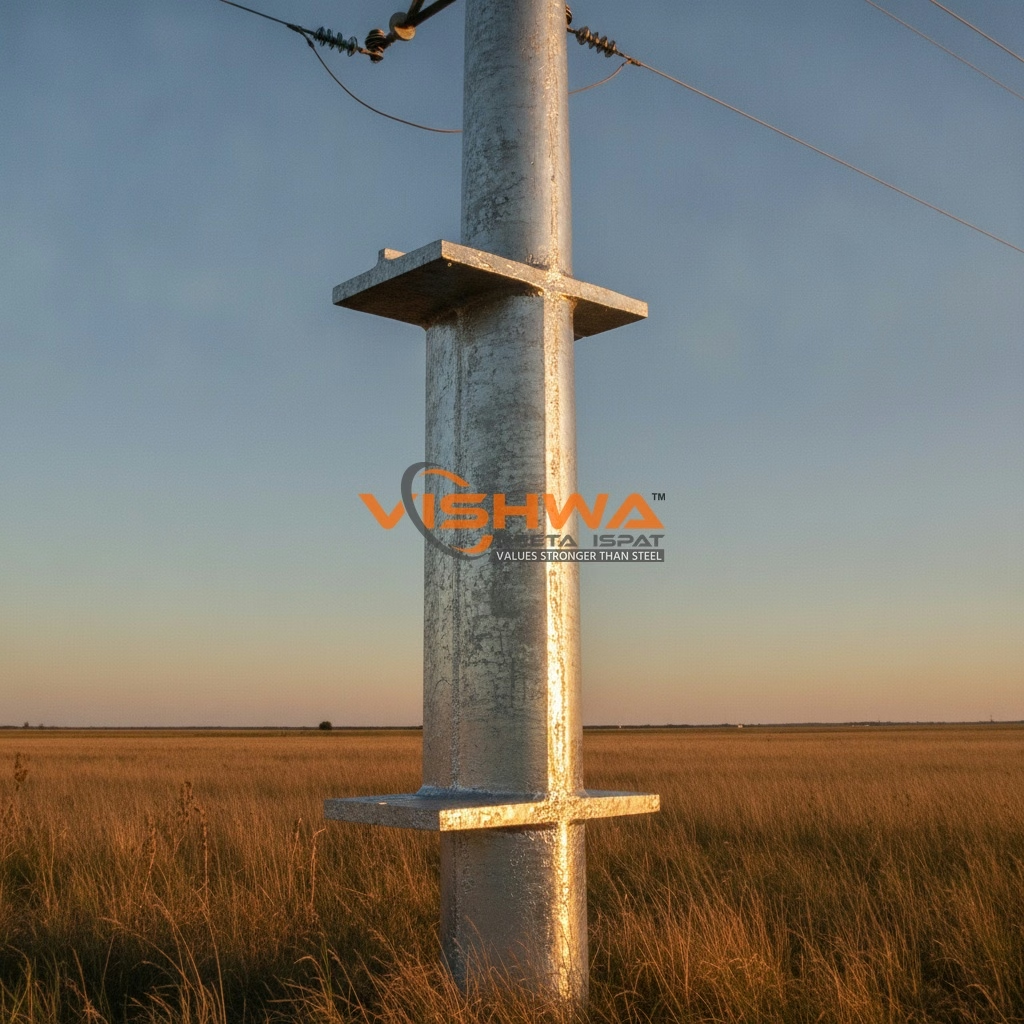
RSJ pole galvanizing — hot-dip zinc coating for long service life.
RSJ Pole Galvanizing & Installation Guide: Coating Life & Leaning Fixes
A correctly galvanized RSJ pole in outdoor India typically delivers 25-40 years of service. An uncoated or inadequately coated pole of identical steel quality can show significant corrosion within 5-8 years — and most poles that lean afterward failed at installation, not in the steel itself.
Galvanizing: The Coating That Decides Service Life
Before galvanizing, confirm the pole meets your RSJ pole weight chart specification for the section size you need.
Hot-dip galvanizing per IS 2629 deposits a zinc layer that acts both as a physical barrier and as sacrificial protection — even where the coating is scratched, nearby zinc continues to protect the exposed steel through galvanic action.
| Environment | Recommended Coating | Typical Service Life |
|---|---|---|
| Standard outdoor / inland | 610 g/m² (IS 2629 minimum) | 25-40 years |
| Coastal zones | 850+ g/m² or epoxy topcoat | Extended, salt-spray resistant |
| Industrial belts | Galvanizing + supplementary paint/epoxy | Chemical-resistant |
| Uncoated / under-coated | — | 5-8 years |
The ground-line zone — where the pole enters soil — carries the highest corrosion risk and needs intact coating and correctly prepared embedment. Always ask for a galvanizing certificate with delivery.
Four Installation Mistakes That Cause Leaning
A perfectly galvanized, correctly specified pole can still become a leaning liability if installation is careless. These four errors account for most field failures:
- Inadequate foundation depth — shorter embedment than the soil type and pole height require; monsoon waterlogging makes this critical since saturated soil has far lower bearing capacity than dry soil at install time.
- Poor soil compaction — loose backfill settles after rain and irrigation cycles, progressively reducing embedment resistance until tilt appears.
- Uneven or rushed backfilling — filling one side before the other creates an initial lean that is difficult to correct once concrete sets or soil compacts.
- Wrong lifting and handling — improper rigging can twist the I-section before installation, throwing the web’s load axis out of alignment with the conductor direction.
Correct Installation Practice
- Calculate embedment depth at 1/6 to 1/5 of total pole length as a minimum, adjusted for soil bearing capacity and wind zone — increase in loose or monsoon-prone soils.
- Compact backfill in 150-200mm layers with compaction between each, to prevent differential settlement.
- Check plumb before backfill completion, while small deviations can still be corrected.
- Use slings at multiple points along the pole for lifting — never a single-point lift that can twist the section.
Related Reading
Frequently Asked Questions
What is the standard galvanizing coating weight for RSJ poles?
610 g/m² minimum per IS 2629 for standard outdoor use; coastal or industrial sites may need 850+ g/m² or an added epoxy/paint system.
How long does a galvanized RSJ pole last?
Typically 25-40 years when correctly galvanized and installed, versus 5-8 years for uncoated or under-coated poles.
Why do RSJ poles lean even when the steel is good quality?
Most leaning is an installation failure — inadequate foundation depth, poor backfill compaction, uneven backfilling, or improper lifting that twists the section — not a material defect.
What foundation depth is required for an RSJ pole?
A minimum of 1/6 to 1/5 of the total pole length below ground, increased for loose soil, monsoon-prone areas, or higher wind zones.
Should I request a galvanizing certificate?
Yes — always request a galvanizing certificate confirming coating weight, uniformity, and adhesion, along with the Mill Test Certificate for the steel section.
Ordering RSJ poles with confirmed galvanizing and site-ready specs?
Share length, section, coating requirement and soil/site conditions — Vishwa Geeta Ispat will map specs and quote within 24 hours.