GI Wire: SWG Gauge Chart, Weight per Metre and Buying Guide
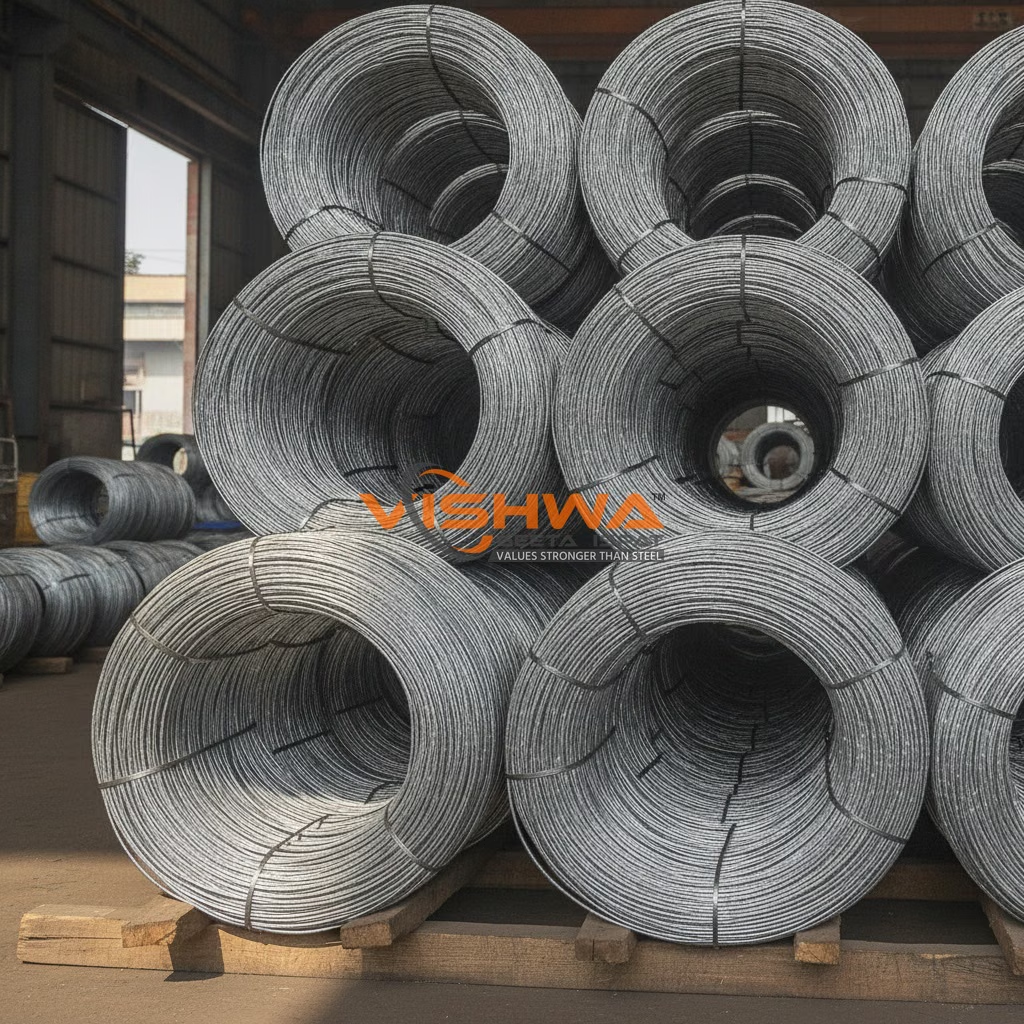
Hot-dip GI wire coils. Check the gauge in mm and the zinc coating class before you buy.
GI wire (galvanized iron wire) is mild steel wire coated with a layer of zinc so it resists rust. It is drawn to size, then galvanized either by dipping it in molten zinc (hot-dip) or by electroplating (electro-galvanized). In India it is sold by SWG gauge, most often between 8 SWG (4.06 mm) and 20 SWG (0.91 mm), and is used for fencing, earthing, binding, mesh and cable armouring. This guide gives the full gauge-to-mm chart with weight per metre, explains the coating types and IS codes, and lists the checks to make before you buy.
What Is GI Wire?
"GI" stands for galvanized iron, although the base metal is actually low or medium carbon steel wire rod. The rod is cleaned, drawn down through dies to the required diameter, often annealed to make it softer, and then coated with zinc. The zinc does two jobs. It acts as a barrier between the steel and moisture, and it corrodes before the steel does (sacrificial protection), so a small scratch does not immediately turn into a rust spot.
That is why GI wire is the default choice for anything that stays outdoors: boundary fences, farm trellises, earthing strips, stay wires and the wire inside barbed wire and chain link. Plain black or annealed wire is cheaper, but it rusts quickly in the open.
Types of GI Wire
Hot-dip galvanized (HDG) wire
The wire runs through a bath of molten zinc. This gives a thicker, tougher coat that suits outdoor and humid conditions such as fencing, earthing and power line work. Manufacturers publish hot-dip coatings from a few tens of grams per square metre up to around 300 g/m² for heavy coating on thicker wire.
Electro-galvanized (EG) wire
Zinc is deposited by electroplating. The finish is smoother and brighter, but the coat is much thinner, often in the range of a few g/m² to around 40 g/m². It works well for indoor use, stitching, binding and light mesh, but it will not last as long outside as hot-dip wire. In the trade it is sometimes called "cold dip" wire.
Soft (annealed) vs hard GI wire
Soft GI wire is annealed so it bends and twists easily without cracking. It is used for tying, binding, packing and agriculture. Hard or high-tensile GI wire keeps more of its drawn strength and is used where the wire must carry load, such as fence line wire, stay wire and the core of barbed wire.
| Feature | Hot-dip GI wire | Electro-galvanized wire |
|---|---|---|
| Coating method | Dipped in molten zinc | Electroplated zinc |
| Coating thickness | Thicker (tens to ~300 g/m²) | Thinner (a few to ~40 g/m²) |
| Finish | Matte grey, slightly uneven | Smooth and bright |
| Best for | Outdoor fencing, earthing, stay wire, barbed wire | Indoor use, stitching, binding, light mesh |
| Rust life outdoors | Longer | Shorter |
GI Wire Gauge Chart: SWG to mm, Weight per Metre
The table below converts the common SWG (Standard Wire Gauge) sizes to millimetres and gives the steel weight per metre and the length you get per kilogram. Weights are calculated with the standard formula for round steel, weight (kg/m) = d² × 0.00617, where d is the diameter in mm. The zinc coat adds a little on top, usually a few percent, and a bit more on thin gauges with heavy coating.
| SWG | Diameter (mm) | Weight (g/m) | Weight (kg/m) | Approx. metres per kg |
|---|---|---|---|---|
| 4 | 5.893 | 214.3 | 0.214 | 4.7 |
| 5 | 5.385 | 178.9 | 0.179 | 5.6 |
| 6 | 4.877 | 146.8 | 0.147 | 6.8 |
| 7 | 4.470 | 123.3 | 0.123 | 8.1 |
| 8 | 4.064 | 101.9 | 0.102 | 9.8 |
| 9 | 3.658 | 82.6 | 0.083 | 12.1 |
| 10 | 3.251 | 65.2 | 0.065 | 15.3 |
| 11 | 2.946 | 53.5 | 0.054 | 18.7 |
| 12 | 2.642 | 43.1 | 0.043 | 23.2 |
| 13 | 2.337 | 33.7 | 0.034 | 29.7 |
| 14 | 2.032 | 25.5 | 0.026 | 39.3 |
| 16 | 1.626 | 16.3 | 0.016 | 61.3 |
| 18 | 1.219 | 9.2 | 0.009 | 109.1 |
| 20 | 0.914 | 5.2 | 0.005 | 194.0 |
| 22 | 0.711 | 3.1 | 0.003 | 320.6 |
Remember that a higher SWG number means a thinner wire. Many mills now quote GI wire directly in mm (for example 2.5 mm, 3.15 mm or 4.0 mm), so always confirm the actual diameter rather than relying on the gauge number alone. For the same calculation on other steel sections, use our steel weight calculator.
Worked example: how many metres in a coil?
Say you buy a 25 kg coil of 8 SWG GI wire. From the chart, 8 SWG weighs about 0.102 kg per metre, so 25 ÷ 0.102 gives roughly 245 metres of steel wire. Because the zinc adds a little weight, the real length will be slightly less, so round down when planning a fence run.
Which gauge for which job?
| Application | Typical gauge range | Notes |
|---|---|---|
| Earthing and stay wire | 6 to 8 SWG | Hot-dip, heavy coating preferred |
| Fence line and boundary wire | 8 to 12 SWG | Hard or high-tensile wire holds tension better |
| Barbed wire and chain link | 10 to 14 SWG | See our barbed wire weight per meter guide |
| Weld mesh and jali | 10 to 18 SWG | Size depends on the opening and load |
| Binding, tying and agriculture | 16 to 20 SWG | Soft annealed wire is easiest to twist |
These are common trade practices, not fixed rules. Your project drawing, the electricity board or the fencing contractor may specify a different size.
Zinc Coating Classes and IS Codes
Two Indian Standards matter most when buying GI wire:
- IS 280 covers mild steel wire for general engineering purposes, including galvanized wire. It sets the size tolerances and tensile properties of the base wire.
- IS 4826 covers hot-dip galvanized coatings on round steel wires. The current edition (2023) applies to wire from 0.2 mm up to 10 mm and groups coatings into light, medium and heavy classes, each with a minimum zinc mass that rises with wire diameter.
Other standards refer back to IS 4826. For example, IS 3975 for cable armouring wire calls for the medium coating class. When you order, ask the supplier to state the coating class and the zinc mass in g/m², and ask for the mill test certificate. A "GI wire" label alone tells you nothing about how long the coat will last.
Light, medium or heavy: what to choose
- Light coating: indoor use, short-term or temporary work, wire that will be painted or PVC coated.
- Medium coating: general outdoor use in dry or moderate climates, armouring wire.
- Heavy coating: earthing, coastal or industrial areas, wet farmland and anything meant to last many years without maintenance.
Common Uses of GI Wire
- Fencing and security: line wire, barbed wire, chain link and concertina coils. See our GI grassland fencing and chain link products.
- Earthing and power: earthing conductors, stay wire for poles and the steel core in ACSR conductors.
- Construction: tying, plaster mesh and light reinforcement work. For rebar tying, most sites use annealed black binding wire instead, which is cheaper because it ends up inside concrete.
- Agriculture: vineyard and vegetable trellises, poultry mesh and crop supports.
- Mesh and products: weld mesh, wire baskets, stitching wire and cable armouring.
GI Wire HSN Code and GST
GI wire falls under HSN heading 7217 (wire of iron or non-alloy steel). Zinc-plated or zinc-coated wire is classified under sub-heading 7217 20, and the eight-digit code depends on the wire thickness (for example 7217 20 10). The GST rate for this heading is 18%, charged as 9% CGST + 9% SGST within a state or 18% IGST between states. Tax rules change from time to time, so confirm the code with your accountant before invoicing. Our GST and landed cost guide shows how to work out the final cost at your site.
How to Check GI Wire Quality Before You Buy
- Measure the diameter with a vernier or micrometer at a few points. Compare it with the gauge you paid for. Undersized wire means less steel per kg.
- Look at the coat: it should be continuous, with no black or bare patches, flaking or rust spots on the coil.
- Do a simple wrap test: wind a short length tightly around a rod a few times. Good coating should not crack or peel off.
- Weigh the coil on a weighbridge or calibrated scale and check the length against the chart above.
- Ask for paperwork: a mill test certificate showing coating mass (g/m²), tensile strength and the IS standard followed.
- Match the type to the job: hot-dip with medium or heavy coating for outdoor work, electro-galvanized only for indoor or light work.
GI Wire Price: What Affects the Rate
GI wire is priced per kg, and the rate moves with wire rod and zinc prices. Thinner gauges usually cost more per kg than thicker ones because they need more drawing passes, and a heavy hot-dip coating costs more than a light or electro-galvanized coat. Brand, quantity, coil size and freight to your site also change the landed price. We do not publish a fixed GI wire price here because it changes often. Message us on WhatsApp with the gauge, coating type and quantity for today's rate, or check the live steel price trend for overall market movement.
Frequently Asked Questions
What is the full form of GI wire?
GI wire stands for galvanized iron wire. It is steel wire coated with zinc to protect it from rust.
What is the weight of 8 SWG GI wire per metre?
8 SWG wire is 4.064 mm thick and weighs about 0.102 kg (102 grams) per metre of steel, which is roughly 9.8 metres per kg. The zinc coating adds a little extra weight.
What is the difference between GI wire and binding wire?
GI wire has a zinc coating that protects it outdoors. Binding wire is usually black annealed wire with no coating, used to tie rebar that ends up inside concrete, so it does not need rust protection.
Which IS code applies to GI wire?
IS 280 covers mild steel wire for general engineering use, and IS 4826 covers hot-dip galvanized zinc coatings on round steel wire, including the light, medium and heavy coating classes.
What is the HSN code for GI wire?
GI wire comes under HSN 7217 20 (zinc-plated or coated wire of iron or non-alloy steel), for example 7217 20 10, and attracts 18% GST.
Is hot-dip GI wire better than electro-galvanized wire?
For outdoor use, yes. Hot-dip wire carries a much thicker zinc coat, so it lasts longer in rain and humidity. Electro-galvanized wire has a smoother look but a thinner coat, which suits indoor or light work.
Need GI wire in Raipur or anywhere in Chhattisgarh?
Vishwa Geeta Ispat supplies GI wire in common gauges along with barbed wire, chain link and weld mesh, with weighbridge-verified dispatch. Send us the gauge or mm size, coating type and quantity for a written quote.